


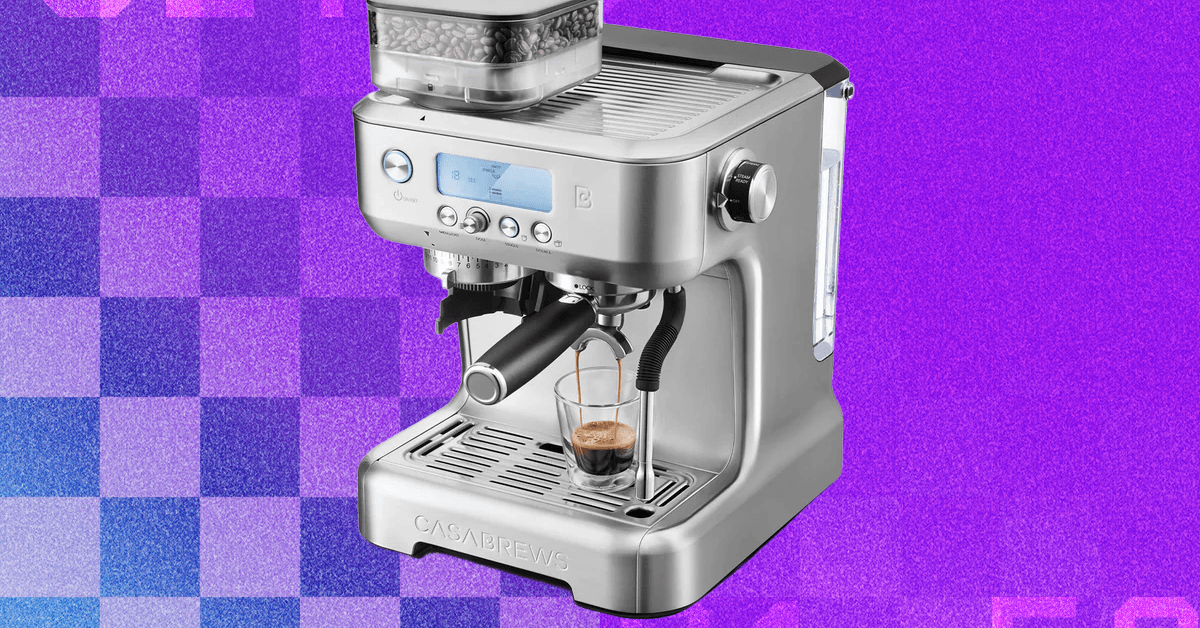
Coffee is the original biohack and the nation’s most popular productivity tool. As we adjust to the changeover to daylight saving time, the caffeine-addicted WIRED Reviews team is writing about our favorite coffee brewing routines and devices. Today, reviewer Peter Cottell expounds on why espresso machines don’t have to be any fancier than a Casabrews 5700. Look out for other Java.Base stories about other WIRED writers’ favorite brewing methods.
There’s a slogan in the guitar world that claims “tone is stored in the fingers.” It’s a reductive notion that’s meant to urge upstart shredders to journey within for an ideal guitar sound that suits them best rather than spend a lifetime and tens of thousands of dollars on expensive pedals, amps, and a high-end guitar with a boomer’s signature engraved on the headstock. The irony of this phrase is that it’s usually muttered by the very geezers who can afford such gear; think Joe Bonamassa, John Mayer, and James Dolan, whom the guitar world refers to as “blues lawyers.”
Fancy coffee gear can get you pretty far, but it’s as useless as a $20,000 Les Paul without technique or inspiration. The punk boom of 1977 showed ambitious musicians that they could get pretty far with attitude and initiative. But it was amidst the egalitarian post-punk boom of the early ’80s that we learned practicing your instrument and keeping an open mind can lead to transcendence, financial circumstances be damned.
In the summer of 2008, I found myself unemployed with a communications degree from a large state college, so I took the next logical step and took a turn in the service industry. A local chain of coffee shops was the first employer to call me back, so off I went to become a barista despite having, until then, consumed a total of 2 cups of coffee in my entire life. I spent the first year drinking cold brew and working afternoon or evening shifts. Then I was moved to mornings, and I had to learn how to dial in an espresso machine. And everything changed forever.
I don’t recall the make or model of the machine, but you’ll get an idea of its form and function when you imagine a local second-wave shop with a ragged GVC aesthetic, a crowded bulletin board that’s overrun with business cards from sex pests turned yoga instructors, and a silly alliterative name like Jammin’ Java or Expresso Express. At the onset, “dialing in” consisted of jiggling the grind size on the grinder until it spit out a pile of grounds that yielded a shot anywhere between 20 and 40 seconds. There was no scale, and the temperature and pressure specs of the machine were a mystery, and no one cared about any of this because most of the espresso drinks we sold were doused in DaVinci syrup and 2 percent milk. It wasn’t until the hammer came down on everyone behind the counter’s overconsumption of expensive sugary drinks that I was forced to reckon with espresso. I spent the next three years figuring out how to coax something drinkable out of this cursed, faltering machine, and I finally reached the same conclusion as many before me: Espresso is universal. It is the base unit of caffeination. The binary code of the coffee world. The bottom brick of everything earthy, bitter, brown, and rich.
After my stint at the declining café in Ohio, I moved across the country and graduated to a bakery-coffee-shop hybrid in Portland, Oregon. While it wasn’t a bona fide third-wave shop, we were close enough to stalwarts on the scene like Heart and Stumptown, so we took coffee as seriously as we could. The morning crew was responsible for dialing in three different grinders: decaf, a blend, and a single origin. Walking to work before dawn in the silent fog was a meditative experience, no matter how hungover I was, and the process of taking notes while sipping shots and adjusting the grinder and extraction time ever so slightly is a morning ritual I would return to daily if I could. Then your coworker arrives, the stereo turns from ambient techno to Electric Wizard, the customers slowly trickle in, and all hell breaks loose. You become one with the machine.