


Former Argentine Senator and ALS advocate Esteban Bullrich was locked out of his Binance account for five months after the platform’s mandatory face verification system failed to recognize him, a direct consequence of the muscular paralysis that ALS progressively causes.
His public appeal on X went viral, drawing widespread attention to a security design gap that routine support had failed to address for 150 days. Binance CEO Richard Teng personally intervened to restore Bullrich’s access and pledged that the platform would do better for users with neurodegenerative conditions.
ALS is taking my body. It shouldn't also take my money.
5 months ago @binance's Face ID stopped recognizing me because the disease changed my face. Their response: nothing. No accessible alternative for users with disabilities.
This is what happens when a platform moving…
— Esteban Bullrich (@estebanbullrich) April 27, 2026
What this story exposes goes beyond one man’s account access. It sits at the intersection of crypto security, digital accessibility, and the real-world consequences of building verification systems that assume every user’s face stays the same.
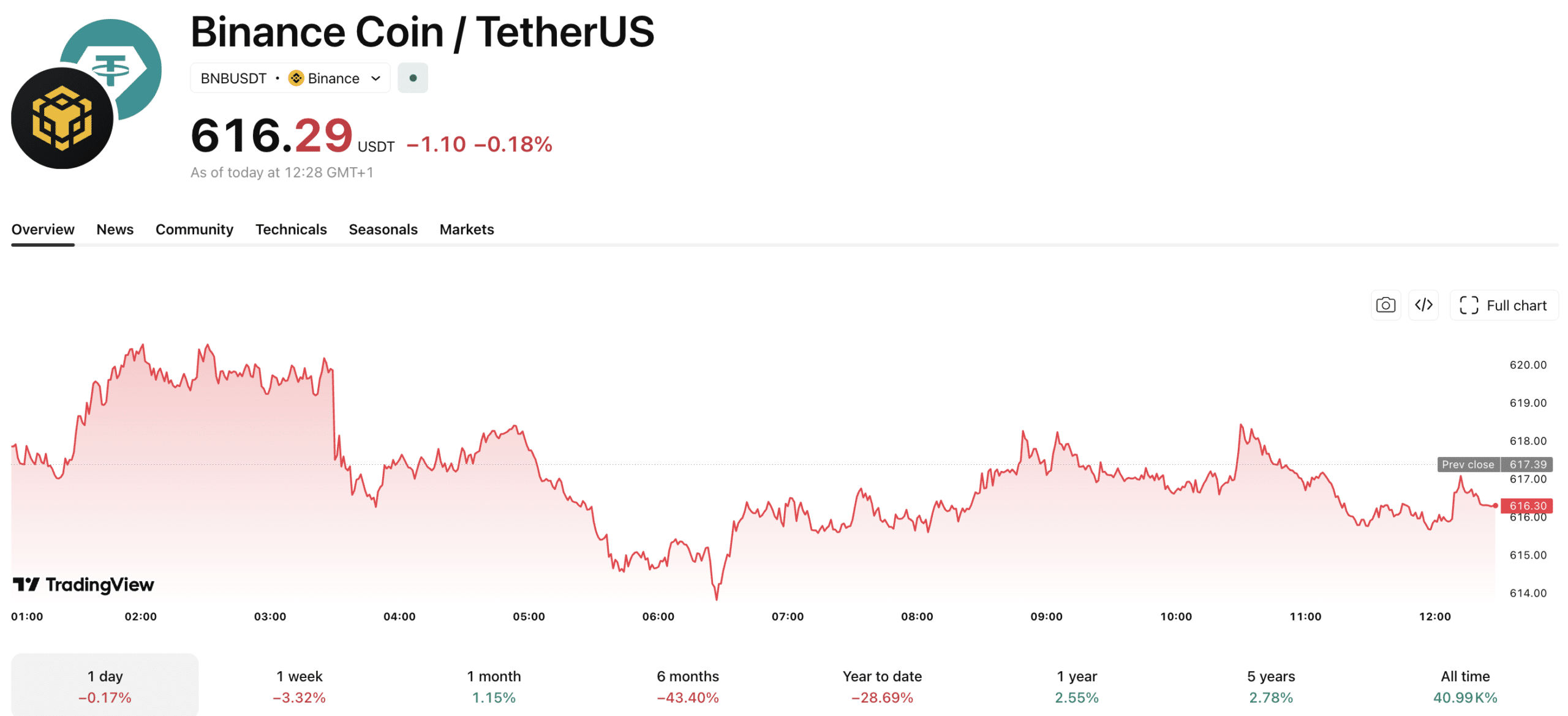
This story dropped as the broader crypto market fell nearly -2% overnight to $2.62 trillion, while BNB is down -1.7% following a market-wide pullback since yesterday’s FOMC meeting.
Bullrich’s Viral Post: When Security Becomes a Lock, Not a Key
Bullrich, 56, publicly announced his ALS diagnosis in April 2021. By December 2024, the disease had progressed far enough to alter his facial features through muscle paralysis, and Binance’s automated face verification stopped recognizing him. His crypto holdings were frozen during a period when Bitcoin slid from the $90,000s to the $70,000s.
After 150 days of unresolved support requests through standard channels, Bullrich took the complaint public on X, tagging both Binance founder Changpeng Zhao and CEO Richard Teng directly.
He described the specific barrier plainly: his face, changed by ALS, could not pass the liveness check the platform required. No alternative authentication method existed. His funds were inaccessible, and the ordinary support process had produced nothing.
The post spread rapidly. Commentators across crypto communities pointed to it as a stark example of what happens when high-security protocols are built without accounting for users whose physical capabilities change over time. Bullrich is also a former Argentine Minister of Education under President Mauricio Macri, which added political weight to a story that was already resonating on its own terms.
Why will $BNB always be my must buy
Look at this structure, every time it runs it's distribution
, every time it bleeds it gets bought back in the same zoneWhile everything else nukes 60-80% and stays dead… Binance rotates, reloads, and goes again
Why? because it’s flow… pic.twitter.com/FbnDWMJk8t
— Mark The Ape (@MarkTheApe99) April 30, 2026
DISCOVER: Best Crypto Presales With Staking Rewards
Richard Teng’s Response: Binance CEO-Level Intervention, Not a Support Ticket
Binance CEO Richard Teng publicly acknowledged the situation and confirmed that Binance’s security team had manually intervened to restore Bullrich’s account access.
Teng stated that while crypto security remains a core priority for the platform, Binance must improve its approach for users with physical disabilities and progressive conditions like ALS.
Binance Argentina had already acknowledged the failure on the same day Bullrich’s post went viral, describing it internally as an accessibility failure requiring correction – a notable admission given that standard support had produced no resolution across five months.
The CEO-level response is what actually moved the situation. That distinction matters: it took a viral post and direct executive escalation to achieve what a support queue could not.
For users exploring what Binance offers beyond the headline features, the platform has been expanding its toolset in other areas as well, including Binance’s AI Pro Agent for automated trades, but accessibility for users with disabilities has clearly lagged behind those developments until now.
The Wider Accessibility Problem: Is Biometric Verification Built for Everyone?
Binance face ID locked out ALS patient for 5 months https://t.co/cQLppu2AJL
— Protos (@Protos) April 28, 2026
The detail most headlines are missing is that this was entirely foreseeable. ALS causes progressive muscle deterioration, including in the face – the muscles that control expression, symmetry, and movement gradually stop responding.
Biometric face verification systems that depend on facial consistency will fail any user whose face changes significantly over time. That includes people with ALS, Parkinson’s disease, and other neurodegenerative conditions.
Think of Face ID like a lock that was cut for your face on the day you enrolled. If your face changes, through disease, injury, or time, the key no longer fits. And if there’s no spare key and no locksmith to call, you’re permanently locked out. That’s the architectural gap Bullrich’s case made visible.
Crypto analysts have flagged this as one of several structural identity problems across the industry, noting that no major exchange has announced a comprehensive backup authentication framework for users whose biometrics change over time. The problem is not unique to Binance; it’s an industry-wide gap in inclusive KYC design that viral pressure, not policy review, brought to the surface.
EXCLUSIVE: Sign up to Binance and claim your 10 USDC welcome bonus exclusively for 99Bitcoins readers
Follow 99Bitcoins on X, YouTube, and Telegram for more crypto news and analysis.
The post Binance CEO Intervenes After ALS Advocate Esteban Bullrich Locked Out by Face ID appeared first on 99Bitcoins.